Exhibition
April 2 - June 27, 2026
Opening Reception:
April 2, 2026
6 - 8 PM PST
Main Gallery
Free to Members and the Public
Free to Members and the Public
EXTENDED TO JUNE 27TH
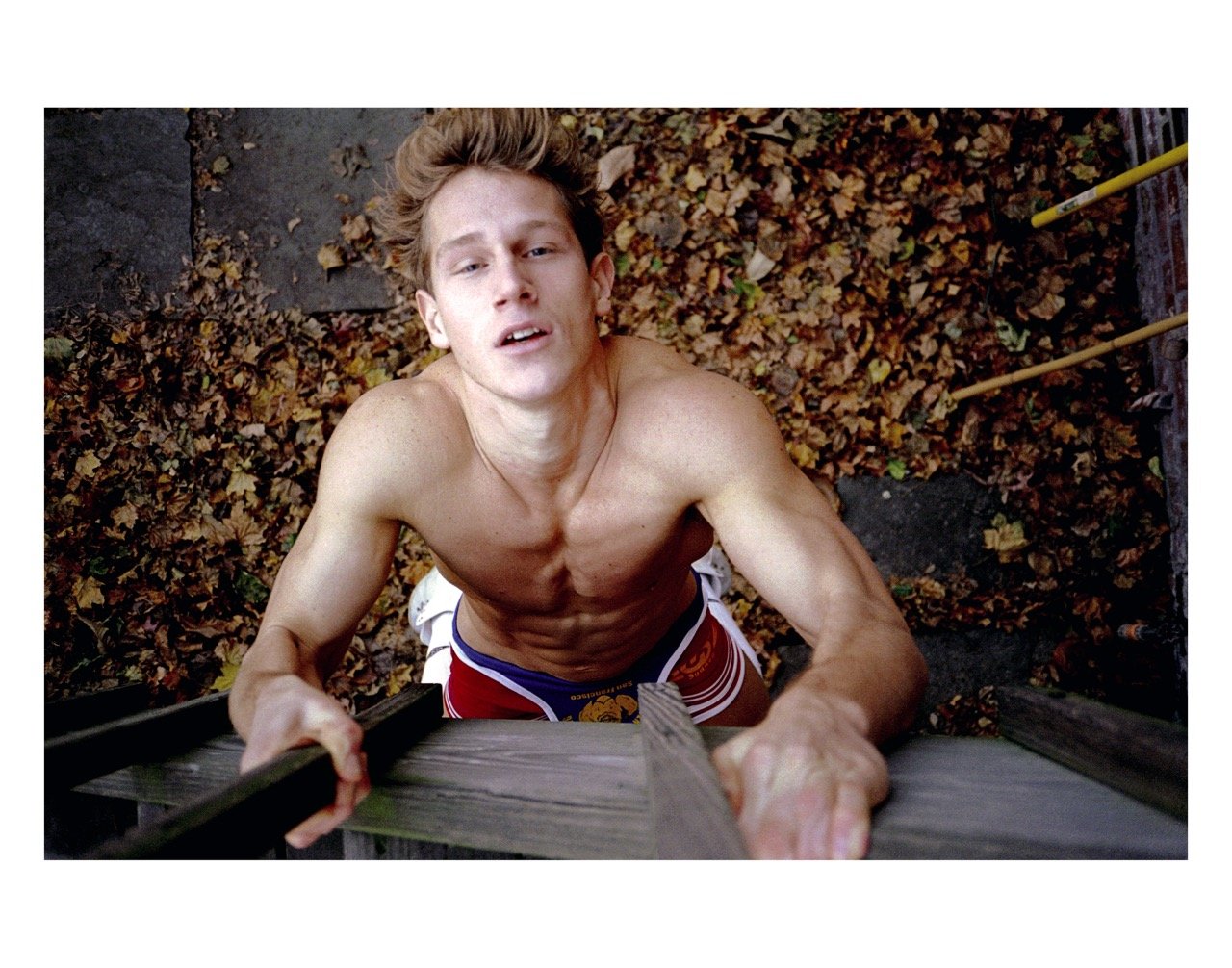
Slava Mogutin is an artist, writer, and photographer whose work emerges from autobiography, exile, and lived political experience. Born in Russia and forced into exile in the 1990s after persecution for his writing and queer activism, Mogutin turned to photography as a means of recording life outside official narratives. Working primarily with analog cameras, he photographs friends, lovers, and collaborators with an emphasis on intimacy, trust, and sustained presence rather than performance.
His photographs function as human documents—records of bodies, relationships, and daily existence shaped by vulnerability and care. Sexuality is integrated as part of lived reality, not isolated as spectacle. Informed by his background as a writer, Mogutin’s images accumulate meaning through sequence and repetition, forming a diaristic archive over time. His work treats visibility as an ethical act, asserting photography’s role as witness grounded in closeness, accountability, and lived truth.
Born in Soviet Siberia during the era of Leonid Brezhnev, Slava Mogutin—artist, poet, activist, and lifelong provocateur—has spent more than twenty-five years documenting queer communities in his native Russia and around the globe while forging a singular body of work rooted in autobiography, exile, and queer resistance.
Like the 19th-century poet Arthur Rimbaud, Mogutin has long pursued art that is restless, transgressive, and uncompromising in its challenge to social norms. Yet beneath the provocation lies deep collaboration: friends, lovers, athletes, dancers, sex workers, and fellow artists meet his camera with trust and agency. His subjects are not props but partners—presented as full, complex individuals whose scars, tattoos, gestures, and imperfections become marks of lived experience.
Working primarily with analog film, Mogutin builds images that feel immediate and tactile. His saturated colors and charged props—boxing gloves, jockstraps, ropes, gas masks, religious iconography—heighten the emotional narrative without distancing the viewer from the human core. Sexuality appears not as spectacle but as an integral part of daily life, resisting the sanitized neutrality that often dominates contemporary depictions of the male nude.
In recent years, Mogutin’s work has grown more reflective and romantic, drawing on mid-20th-century queer visual culture while embracing quieter palettes, black-and-white photography, and a diaristic sense of time. Alongside more than two dozen books, he continues to photograph, write, and curate internationally, with exhibitions in Berlin, New York, Los Angeles, and Mexico City, and collaborations spanning fashion houses such as Comme des Garçons, Helmut Lang, Sébastien Meunier, and VETEMENTS.
Over the decades, Mogutin has also worked with and alongside a wide constellation of writers and artists, including Allen Ginsberg, Dennis Cooper, Edmund White, Bruce LaBruce, Attila Richard Lukács, Ron Athey, Cassils, Lydia Lunch, and Genesis P-Orridge.
This exhibition at the Bob Mizer Museum, organized by Dennis Bell with De Kwok and Maxwell Sutter Zinkievich, presents a focused selection from Mogutin’s analog archive—works shot on 35mm, 120mm, and Polaroid film, including images from his Lost Boys and Analog Human Studies series.
Together, they remind us that vulnerability can be radical, intimacy can be political, and, indeed, today is a good time to get naked.
Hunter O'Hanian
art historian